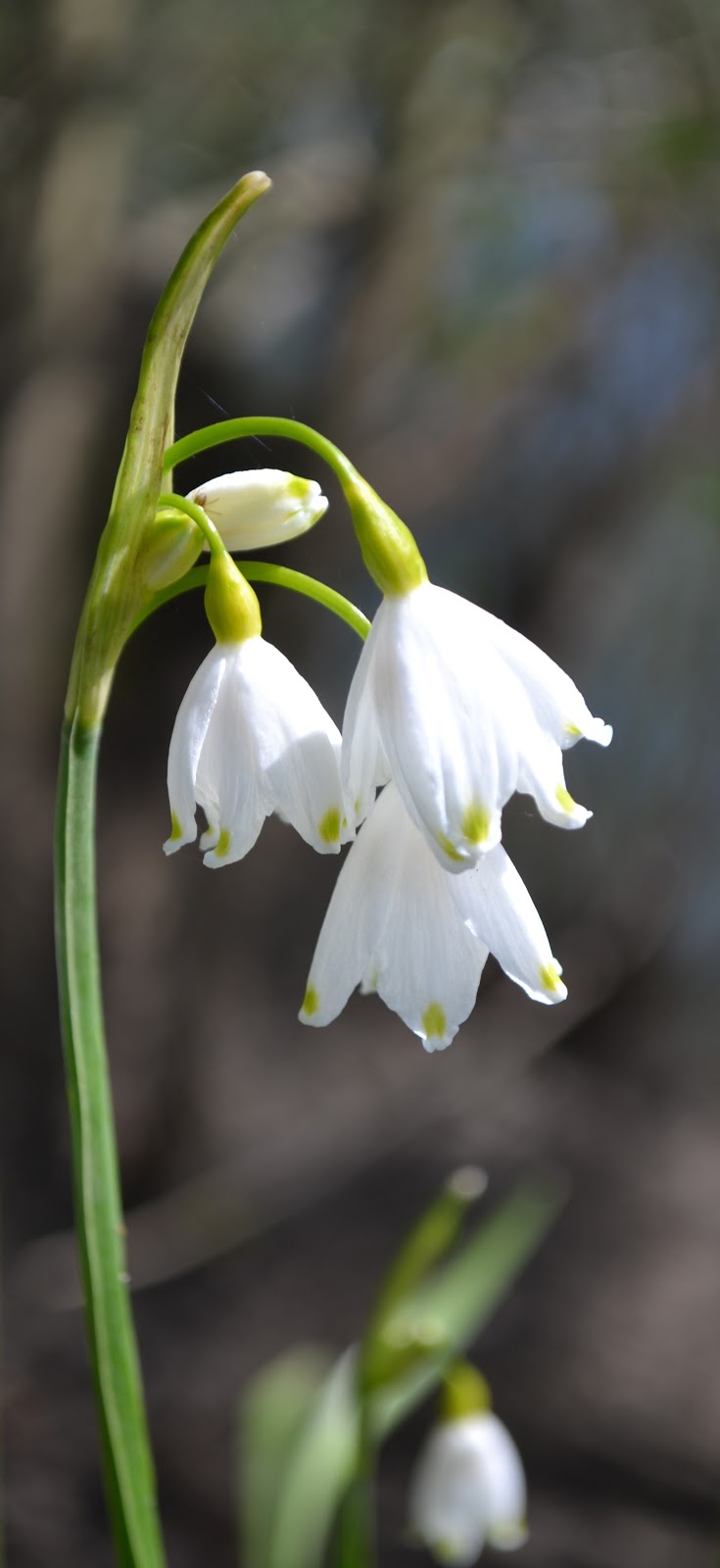
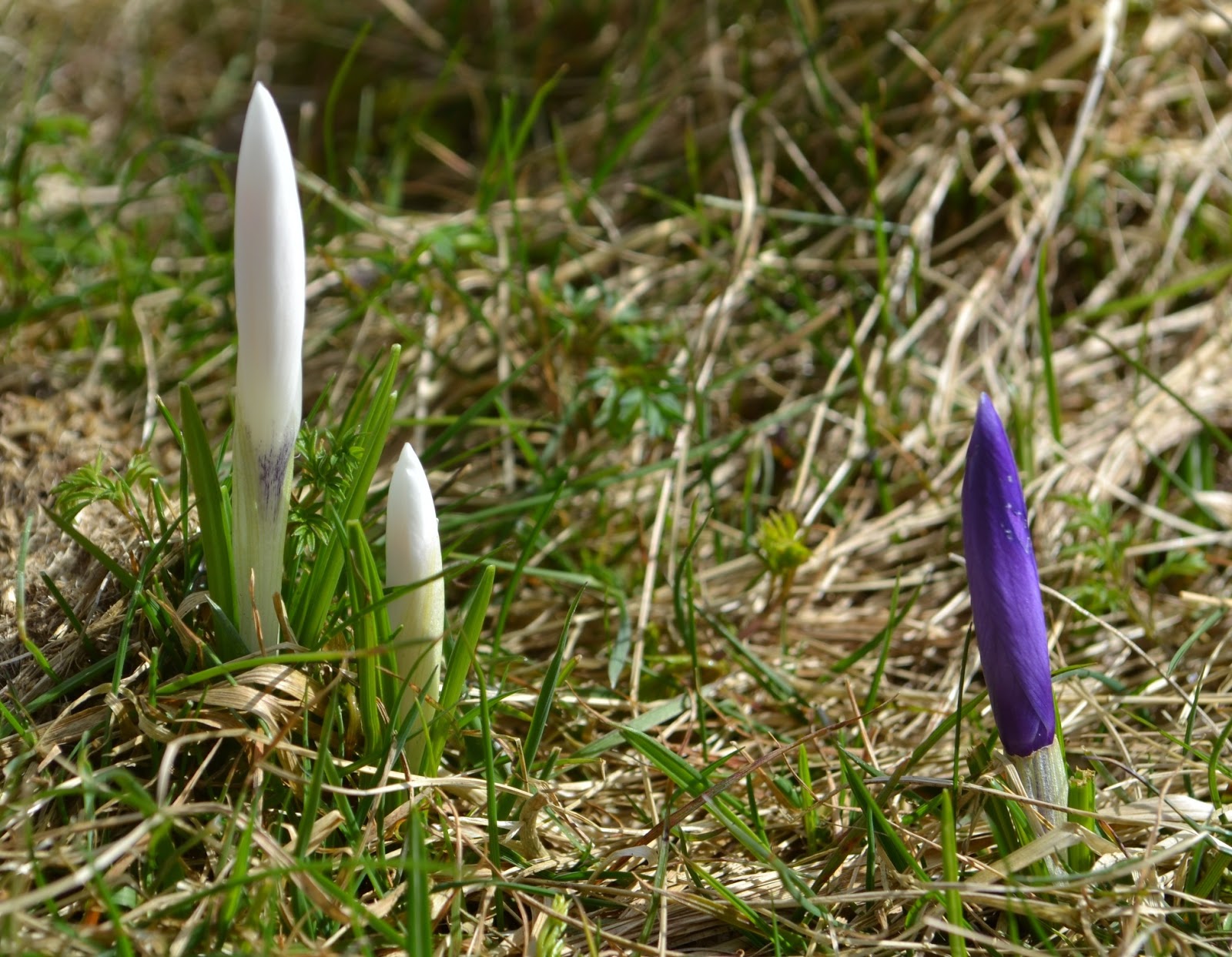
About this Blog

This blog reflects our twin interests in walking and natural history, especially botany.


"Ich wandle unter Blumen

Und blühe selber mit ..."

Heinrich Heine


Walking is important to us as a way of being in direct touch with the environment, experiencing species and habitats in their ecological and historical context. By walking between different flower sites we experience the character of the general countryside, getting to know as much where flowers are not as where they are. Walking allows for the serendipitous - chance encounters with animals, meetings with local people, unexpected species - which enrich the experience.

We set up this blog to share a variety of mainly day-long walks centred on "iconic" flower sites and locations of rare plants, where these are publicly accessible. The accounts include descriptions of the routes taken, key plants seen, other wildlife encountered, and anything of general environmental or historical interest. All the walks allow time for looking around (some flowers need searching for), photography etc, and usually include a half-way stop for refreshment at some suitable establishment. The walks are seasonal, depending on the flowering/fruiting times of different species, although one cannot hit the peak time for all species seen on one walk, and the best timings will vary from year to year. Lengths vary but the walks may be anything up to 12 miles or more, so an early start is recommended.


A certain knowledge of our flora is assumed, but those less familiar should be able to identify most of the plants mentioned with the help of one of the good field guides - Blamey, Fitter and Fitter Wild Flowers of Britain & Ireland (A&C Black) or Francis Rose The Wild Flower Key (Warne) - although occasionally recourse may be needed to more technical tomes such as Clive Stace New Flora of the British Isles (Cambridge) or the specialist volumes published by BSBI (Botanical Society of the British Isles) on grasses, sedges, umbellifers etc.


While examining plants it is interesting to note the galls, leaf-mines and fungi (rusts etc) that are often specific to particular taxa. For galls we use Redfern and Shirley British Plant Galls, for leaf-mines http://www.ukflymines.co.uk/ (which also includes lepidopteran and other mines), and for fungi Ellis and Ellis Microfungi on Land Plants, although this is a technical tome rather than a field guide.

Our completed walk around the coast and borders of England is described on http://www.coastwalking.blogspot.co.uk/ and our current walk around the coast of Wales is on http://www.coastwalkwales.blogspot.co.uk/


Tuesday, 21 May 2013

Berkshire: River Loddon & the Loddon Lily


30 April 2013                                             OS 175: Reading & Windsor

Length: half day.
 
This walk was essentially all about the rare Loddon Lily Leucojum aestivum, which is either native or long-established here along the Loddon and to a lesser extent by the Thames, although it occurs elsewhere casually as a recent garden escape.
 
We started at the car-park of Dinton Pastures Country Park just east of Reading SU785717 (just £2-40 all day).  The park was busy with dog-walkers, joggers and groups of walkers of all kinds.  With it being a sunny spring day after a long winter, flowers, bee-flies and butterflies (most of the spring species including holly blue) were out in quantity.
Comma on its food-plant

 We took the path west along the south side of the park, heading straight for the River Loddon, which forms its western boundary.  We passed some indigenous wood-carvings of a bird and snail.


Bluebells Hyacinthoides non-scripta were just out - our first of the year; lesser celandine Ficaria verna, garlic mustard Alliaria petiolata, greater stitchwort Stellaria holostea.  Many trees and shrubs were flowering: blackthorn Prunus spinosa, Norway maple Acer platanoides, field maple Acer campestris, ash Fraxinus excelsior, wild cherry Prunus avium.
 
Norway maple flowers & lichen Xanthoria parietina

Ash flowers
 
By the streams, lakes and pools (these are former gravel workings) great pond sedge Carex riparia and hemlock water dropwort Oenanthe crocata were common.  At the first lake, ducks and geese congregated around the interpretation board where there was obviously regularly feeding.  They were largely mallard, Canada geese, Egyptian geese, coot, mute swans, herring gulls, tufted duck, a few gadwall, great crested grebe and a possible melanistic mallard.
 

Egyptian goose and mallard

Gadwall quacking

Melanistic mallard?

Freshly-opened cuckoo-pint Arum maculatum posed for a picture and could not be refused.
 
When we reached the river, we first saw ramsons Allium ursinum on the banks, the flowers still in bud, wrapped in a white cowl, but soon afterwards we began seeing clumps of Loddon lily and these were at a perfect stage in their flowering season.  We saw these scattered the whole length of the river on both sides between the southern and northern boundaries of the Country Park.  Reminiscent of snowdrop with the green spot on their petals, most spikes had 2 or 3 bell-shaped flowers which hung their heads demurely.  The rare flower that happened to be gazing upwards revealed the striking orange anthers inside which normally remain unseen.


Close-up of Loddon lily showing orange anthers
 
We explored the east bank and then crossed the river by the bridge at the south end of the park to follow the west bank north.  Where mud had been dredged from the river there were bleached remains of the River Snail Viviparus viviparus, restricted to major rivers like this and the Thames, and Swollen River-mussel Unio tumidus.  Deep in the stream could be seen the large submerged leaves of fringed water-lily Nymphoides peltata.

          After diverging from the river round a large field, we followed a path through an equally large marsh.  It was fortunate that the path was concreted here because the water was very high in the centre, coming over our feet, and it would otherwise have been difficult getting through.  It led to a rather decrepit wood (Sandford Mill Copse?) with some old trees that looked as though it had seen better times, but by going right at the entrance through fallen wood debris we came across a swamp with thousands of Loddon lilies crowded around, the largest colony we found (see picture).
 
 
Although neglected and with some rubbish, this copse also contained wood anemone Anemone nemorosa, primrose Primula vulgaris and moschatel Adoxa moschatellina.  Some of the latter had distorted stalks and the silvery spore-capsules (sori) of the fungus Puccinia adoxae.

Wood anemone and primrose

Moschatel
 
Old willows had the common bracket fungi Willow Bracket Phellinus igniarius and Blushing Bracket Daedaleopsis confragosa.

Willow bracket

Blushing bracket
 
At the top of the wood (having found the right route among the meandering paths) we were confronted by the apparent wreck of an aeroplane!


Having found a way around to the other side we discovered the Berkshire Museum of Aviation.  There were a couple of outside exhibits and much other stuff inside a hanger, but it was currently closed.  Just inside the fence by the entrance were the dead seed-stalks of tower mustard Arabis turrita, reportedly transferred here when land nearby where it grew was landscaped for the museum car park.  On a barish grassy bank opposite the entrance grew early forgetmenot Myosotis ramosissima, cornsalad Valerianella sp, thale cress Arabidopsis thaliana, common whitlow-grass Erophila varna, parsley-piert Aphanes arvensis, field woodrush Luzula campestris and leaves of tansy Tanacetum vulgare. 
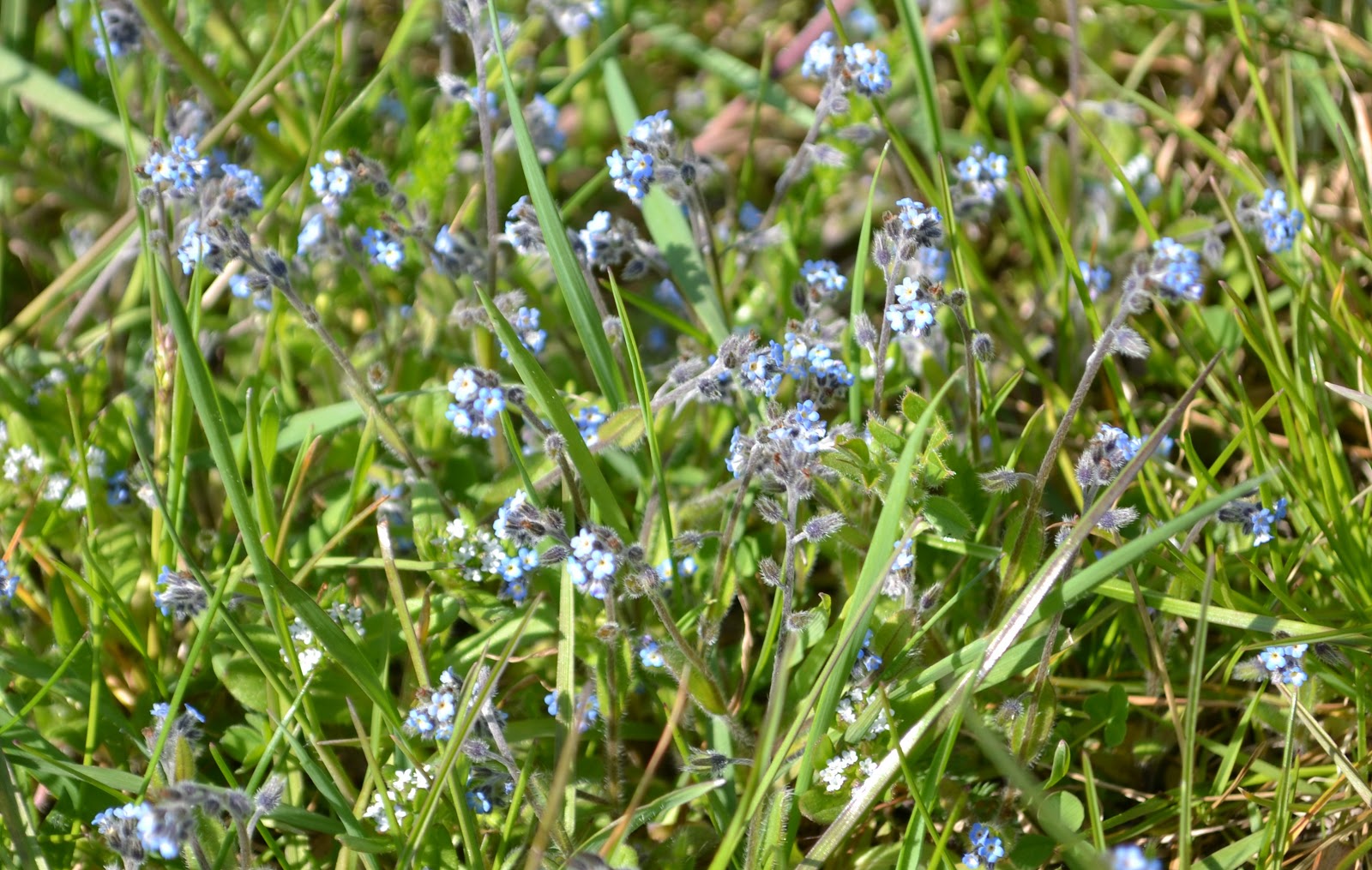
 
Early forgetmenot

Nearby were garden yellow archangel Lamiastrum galeobdolon montanum, garden grape hyacinth Muscari armeniacum, honesty Lunaria annua, purple and white forms together, and curly leaves of crow garlic Allium vineale.

Honesty in purple and white forms

The museum has access to the lane from Reading to Sandford Mill, which we took past the latter, where a dell below the road as it passes over the Loddon had more Loddon lily, ramsons and marsh marigold Caltha palustris.  The bridge itself supported hartstongue Phyllitis scolopendrium and common mosses, while shiny cranesbill Geranium lucidum was common in the verges. 
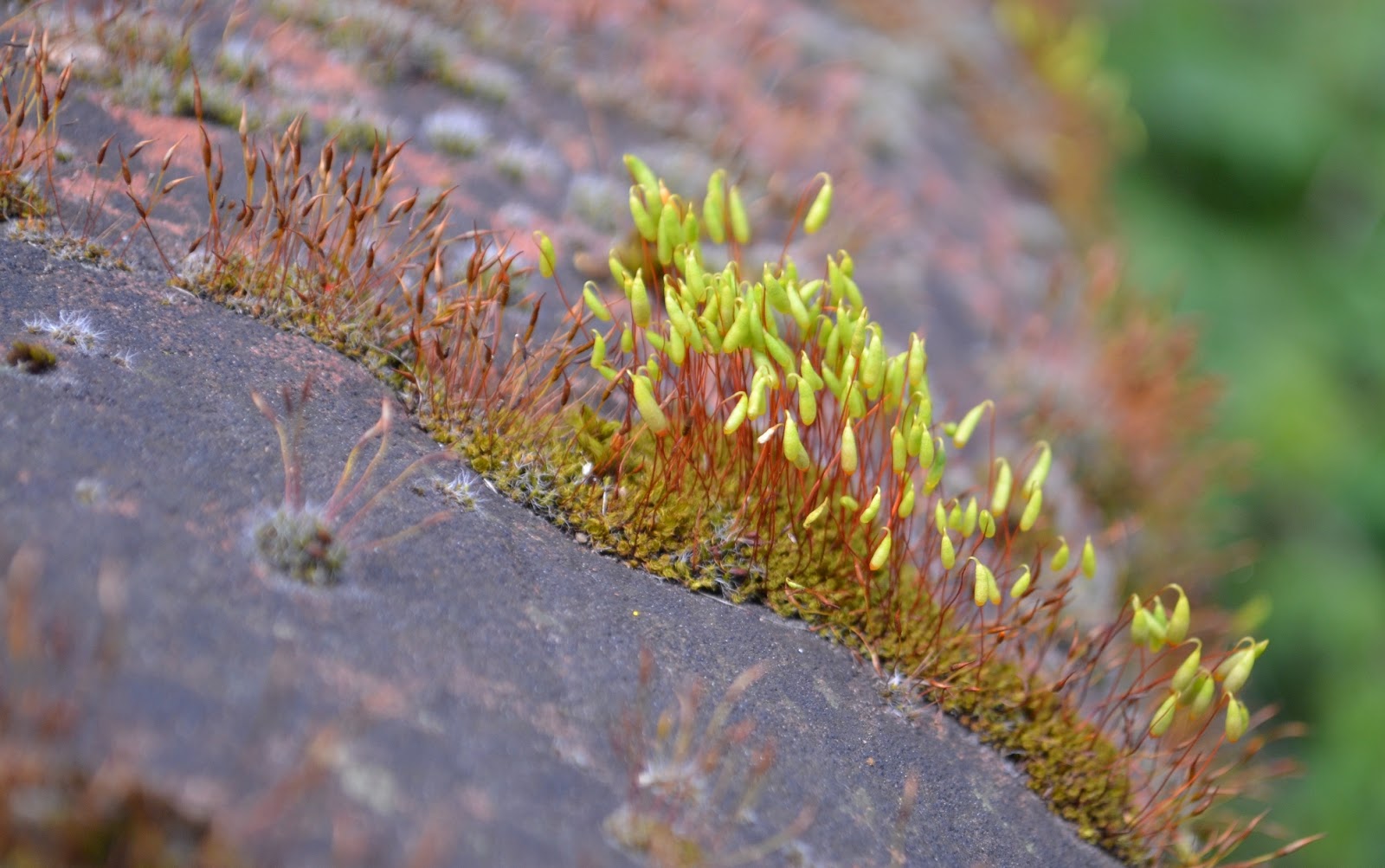
Mosses on bridge, Bryum capillare (green capsules) & Tortula muralis
 
Shining cranesbill


Just over the second bridge a path goes left along the east bank of the river again.  (Another path across the road re-enters Dinton Pastures just where there is a large bush of wild plum Prunus domesticus in full flower, with the leaves unlike blackthorn.)

Wild plum

 Back beside the river we saw alder-fly emerging and passed the corpse of a common shrew (these creatures always seem to die in mid-path).  From a bird-hide we could see across another of the gravel-extraction lakes where there was a narrow island adopted by a group of cormorants.  Other birds were great crested grebe, lesser black-backed, black-headed and herring gulls, Arctic terns, and moorhens.  A fox was scouting the far bank, perhaps looking for accessible nests to raid.  Frequent along the well-vegetated banks were the clambering vines of hop Humulus lupulus. 

River Loddon

At Whistley Mill a heron was fishing beside the wide old mill-pool. 

Heron at Whistley Mill
 
The riverside path ends here and we had to divert westwards and then north along a wide track through more lakes reserved for angling clubs and protected by high fences, spoiling the experience for walkers.  Goldilocks buttercup Ranunculus auricomus was frequent on the pathside, and occasionally water chickweed Myosoton aquaticum. 

Goldilocks buttercup

 After passing underneath the main Paddington railway we were in Berks Bucks and Oxon Wildlife Trust's Loddon Reserve, with much planted western balsam poplar Populus trichocarpa with fresh bright green leaves and red currant Ribes rubrum.  One path rejoins the Loddon, where the banks were full of comfrey Symphytum sp not yet in flower.  In wet hollows was more Loddon lily and marsh marigold.
         The path eventually leads to the road on the west edge of Twyford, where we found a café for a snack.  Alongside the main road, between the pavement and a cottage wall were a few plants of early scurvy-grass Cochlearia danica.
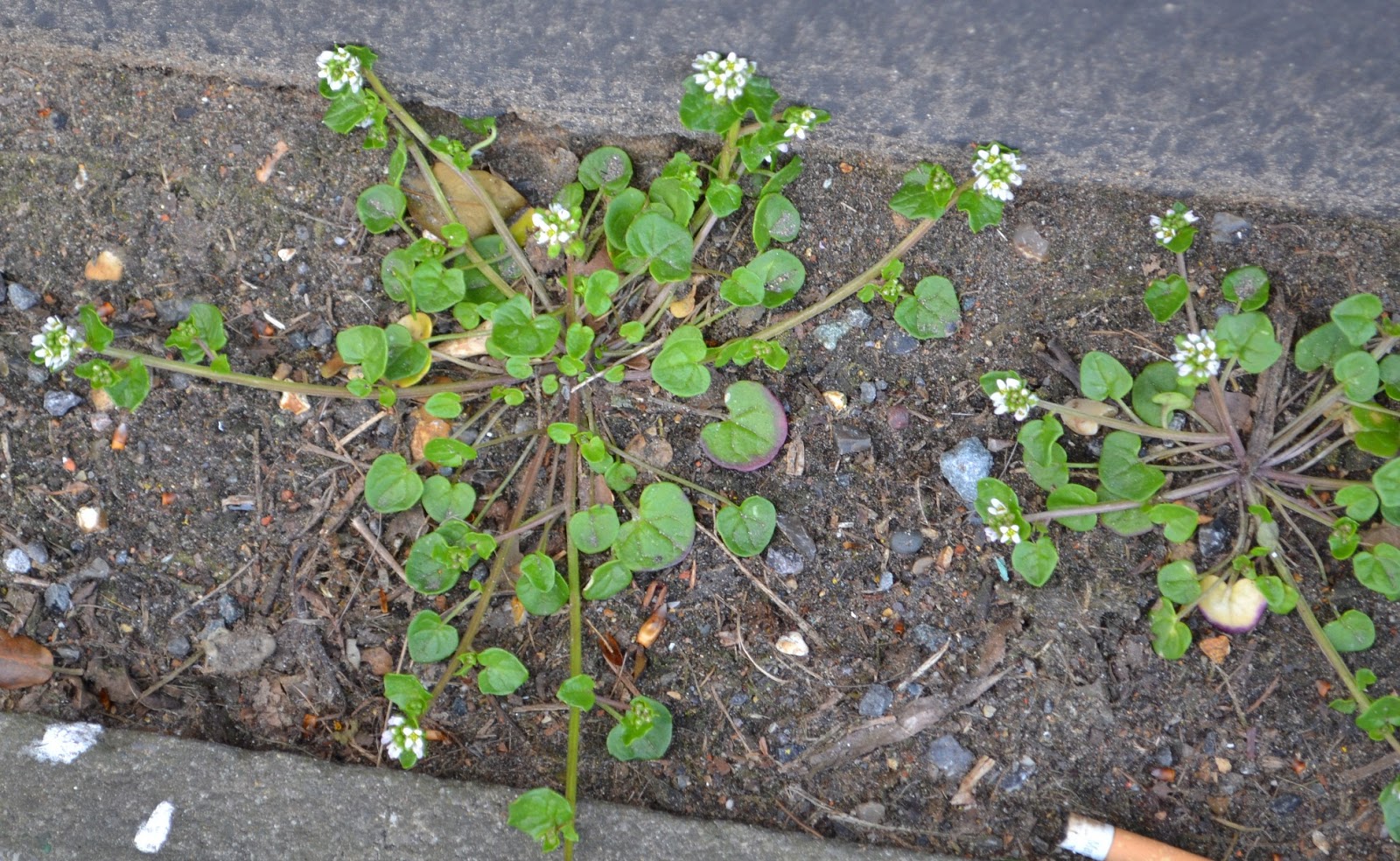
Early scurvy-grass in Twyford

 This walk could easily be foreshortened by returning through Dinton Pastures after Sandford Mill (past the wild plum) without missing much of consequence and having seen the best the Loddon lily could offer.  By the car-park is a café that might then be useful.
         We afterwards drove to the pleasant old town of Wallingford and walked up the west bank of the Thames north to opposite Preston Crowmarsh, a place where Loddon lily has also been recorded, but we only found two well-separated plants and the banks were too built-up and bare to provide suitable marshy habitat.  However, we did find flattened meadow-grass Poa compressa and Mexican fleabane Erigeron karvinskianus growing on Wallingford bridge and saw mistle thrushes feeding in the grassy parkland beneath the bridge, while beside the street from the bridge into town was rue-leaved saxifrage Saxifraga tridactyla.


Friday, 12 April 2013

Oxfordshire: Evenlode Valley


2 April 2013                                                      OS 164 Landranger

All day (9 miles)


The main purpose of this walk was to visit three sites for the rare Yellow Star-of-Bethlehem Gagea lutea on the steep wooded slopes on Jurassic limestone above the River Evenlode.  We had seen it here (in Mill Wood) on 30 March 1974, when this picture was taken.
Yellow star-of-Bethlehem, 30 March 1974, Mill Wood

 Then it had been a sunny warm spring day and we had been able to have a picnic.  This year was quite different with an extended cold winter that had delayed spring; although it was sunny all day the temperature did not arise above 6ºC except in places sheltered from the east wind.  We saw some of our first spring flowers for the year, which we would have expected to have seen in February or early March.  There was, unfortunately, no evidence of our target plant and it may be that this year we were too early for it.  We hope that it is still there, as it does not seem to receive any special protection, although two sites are SSSIs.  The Oxfordshire Flora (1998) gives Whitehill Wood and Sturt Copse (not Mill Wood) as extant sites, but the latest date quoted is 1991.
            Even without our target plant, this walk is a very enjoyable one, with much to see (even more almost certainly in a normal year) and a truly great pub for a lunchtime break.  We used our car, but anyone in reach of Oxford by train could take the Oxford-Worcester line to Combe Halt, starting and finishing the walk there, although we do not know how frequently trains stop there.
            We parked in Millwood End, Long Hanborough, at the eastern end SP416144, and walked down Swan Lane towards Combe Station.  The only plant flowering in the roadside hedge was dog's mercury Mercurialis perennis.  This plant constituted the dominant ground flora in all the woods visited and is visible in the photograph of Gagea lutea above.

            At the bottom, before the river and railway a footpath ran to the left beside a quarry works.  In the first field was a stand of very large thistles, very dead and brown, but from their unwinged stems we guessed they had been woolly thistle Cirsium eriophorum.  We then entered Mill Wood at the bottom of the steep slope, with a very wet marsh area beside the Evenlode River on our right.  Above us were the remains of a quarry into the limestone.

 
Quarry, Mill Wood


The ground was largely bare with spring delayed, but the evergreen hart's-tongue fern Phyllitis scolopendrium was evident.  Beside the Evenlode was a bulb plant in bud which may have been an introduced spring snowflake Leucojum vernum.  Apart from dog's mercury the other dominant ground plant in evidence was ramsons Allium ursinum, not yet in flower, which was also prevalent throughout the other woods we were to visit.

            Someone had built wooden platforms into the marsh pools, but the paths at this level had been so inundated they were impassable.  We saw a large patch of frozen frogspawn, where some early frogs had been caught out by a brief mild spell.  We walked just above this level, below replanted woodland, and we saw no evidence of yellow star-of-Bethlehem.  The path emerged from the wood and kept to its edge with views of the river below and Combe on the opposite hill-top.

 
View from Mill Wood to Combe across Evenlode (line of pollarded willows)

We continued the path as it went uphill through woodland to the track on the west side of Long Hanborough.  We took this very rutted track westwards past a wood on our right to the road at East End.  Snowdrops Galanthus nivalis were still flowering in the verge.  On garden walls were rue-leaved saxifrage Saxifraga tridactylites and much intermediate polypody Polypodium interjectum.  We saw the latter on various walls and in the woods throughout the day.

 
Intermediate polypody, East End


At the west end of the village there was Sturt Copse on our right with stands of flowering spurge laurel Daphne laureola.  We did not see this plant further into the wood, so that although it could be native it seemed more like a garden escape here, reinforced by the existence of winter aconite Eranthus hyemalis and creeping comfrey Symphytum grandiflorum as well at this part of the wood.

 
Spurge laurel


Further down the wood, apart from dog's mercury and large patches of ramsons, was occcasional primrose Primula vulgaris, gooseberry Ribes uva-crispa, while intermediate polypody grew on tree boughs and stumps with the moss Brachythecium rutabulum.  Bugle Ajuga reptans and moschatel Adoxa moschatellina leaves were present, but no flowers yet.  The wood was largely hazel Corylus avellana and ash Fraxinus excdelsior coppice with scattered standards of oak Querus robur and beech Fagus sylvatica.

 
Sturt Copse with ramsons

 
Epiphytic intermediate polypody with moss Brachythecium rutabulum

There was an abundance of snails, going by the shells lying around, including the large Roman snail, round-mouthed snail, Cochlodina lamellata, Azeca goodallii  and the rare Ena montana, with a variety of more common species.

 
Ena montana shells

 
Cochlodina lamellata

 
Aegopinella nitidula shell with mosses Atrichum undulatum and Diocranum scoparium


At the bottom of the wood is the River Evenlode with an informal path along the bank.

 
River Evenlode, Sturt Copse to left


A path leaves the NW corner of the wood straight down to the remains of North Leigh Roman Villa, with the base of the walls of the rooms on the west side of a courtyard excavated to view, including two baths, while a covered hut encloses a well-preserved section of floor mosaic.  The villa was no doubt the source of the Roman snails in the wood above.  There was a pleasant scatter of white-flowers of common whitlow-grass Erophila verna over the remains.  Lapwings were seen in the fields around the site.

 
North Leigh Roman Villa


Turning left at the villa took us to a track we followed north over the railway line and through pasture to the River Evenlode.  Here we could take the riverside path back south through Whitehill Wood, another pleasant walk.  Just before passing under the railway we passed a large old oak which measured 478cm in girth.  The wood begins after the bridge and again we found Roman and round-mouthed snails and Ena montana, wood anemone Anemone nemorosa leaves (far yet from flowering), and one plant of toothwort Lathraea squamaria just pushing up from the soil.  There was plenty of hazel coppice where one might expect to find toothwort.

 
Toothwort just emerging


The path from Whitehill Wood reaches a crossroads at Ashford Mill Farm, where we took the lane west to Wilcote.  At the corner was a grassy bank with the first sweet violets Viola odorata (purple form) we had seen in flower this year. This quiet lane is bordered partially by a typical Cotswold stone wall, with views again over the Evenlode Valley.

 
Cotswold stone wall, Ashord Mill Farm visible through gap


 In the hedge was much Oregon grape Mahonia aquifolium, still in bud, probably a relic of shrubs grown for pheasant cover in the estate of Wilcote House which could be seen just ahead.  Outside the Keeper's Cottage on the road verge was Turkish squill Scilla bithynica in flower, winter aconite and winter heliotrope Petasites fragrans.

 
Turkish squill and leaf of winter heliotrope

At the next crossroads the lane ahead is flanked by two large gateway pillars, looking like a private drive to Wilcote Manor that can be seen ahead, but this is actually a public road, although it obviously was once a drive, as it is bordered by various bulb-plants like Galanthus nivalis 'flore pleno' and winter aconite, box Buxus sempervirens and yew Taxus baccata in flower.  There is little left of the village of Wilcote than a few grand houses, of which the oldest is the Manor House, mentioned in the Domesday Book.  In grandeur it is now overshadowed by Wilcote House built in the early C17th.  The old church of St Peter's also remains, partially late C12th.

 
St Peter's, Wilcote

Along the lane beyond Wilcote was a bank of flowering lesser celandine Ficaria verna and coltsfoot Tussilago farfara, again the first of the latter we had seen in flower yet this year.

 
Coltsfoot

Birds seen around Wilcote included pheasant, long-tailed tit, jay and goldfinch.  The village name derives from Old English for "cottages at the well" and the water table is unusually near the surface here, although we were at over 130m above sea-level.  This became very apparent when we took a footpath off the lane to go to Ramsden, which we soon regretted, so water-logged it had become and sometimes with water so deep one would have to wade it!  We determined we would stick to the lanes on the way back.

            Ramsden is named from OE for "valley of ramsons" and it is easy to imagine that this was always a prevalent plant around here, from the large quantities we kept seeing in the region.  It was presumably used extensively in cooking and salads.  On walls into Ramsden we passed yellow corydalis Pseudofumaria lutea.  By the central crossroads of this pleasant little village is the Royal Oak pub, where we received a very friendly welcome and there was a wide choice of good food, compensating more than a little for the disappointment of not finding any Gagea lutea.

 
Royal Oak, Ramsden


Opposite the pub stands the tall spire of the church which was facing us when we arrived.  The churchyard has well-naturalised snowdrops, a row of short clipped yews and the usual intermediate polypody on the walls.

 
Ramsden and its church spire

All that remained then was to walk the lanes back to Long Hanborough.  Just before East End there were large patches of winter aconite on the left-hand side.  We visited Sturt Copse again to gather some fresh ramsons leaves for salad.  A wall in Millwood End, Long Hanborough, had intermediate polypody, maidenhair spleenwort Asplenium trichomanes and wall-rue A. ruta-muraria.

Monday, 18 March 2013

Berkshire: Inkpen Crocus Field and Steventon


12 March 2013                                           OS 174: Newbury & Wantage

Length: 20 minutes & 30 minutes, with a drive in between.

 
This was our second late-winter bulbs trip of the year, while we waited for the native plant season to begin.  The Crocus Field at Inkpen is managed by Berks, Bucks and Oxon Wildlife Trust, with summer grazing by cows, and is the most extensive crocus colony in the country, which is documented to extend back at least 200 years and could be much older, local lore attributing the introduction of the bulbs by returning Crusaders. 
          We parked by the Village Hall at SU372642.  Immediately south of here is Pottery Lane (although we saw no road sign to that effect), a minor cul-de-sac between large houses followed by a bridleway leading west.  Under the hedges along here we immediately saw the usual snowdrop garden escape Galanthus nivalis 'flore pleno'.
 
Galanthus nivalis 'flore pleno'

A track peels off left to the Crocus Field after about the fifth house.  Under the hedge were two other garden escapes, the spotted leaves of Lungwort Pulmonaria officinalis, and Creeping Comfrey Symphytum grandiflorum, but the latter had been badly affected by the current cold snap after a "false spring" a few days before had encouraged it to come out in full flower.  (Today the air temperature was 1ºC, with a very cold east wind that gave a chill factor of some -6 or -7ºC.) 
 
Creeping comfrey devastated by frost

At the end of this short lane a gate leads into the Crocus Field, a pasture bordered by gardens on the north and east sides and sloping SW down to a brook, where it rises again beyond. 
 
The Crocus Field from across the brook
 
The dark purple Spring Crocuses Crocus vernus - there seemed to be just the one species - are distributed all over the first field, with a few having established themselves in the grass beyond the stream, where there were also some small clumps of Primrose Primula vulgaris in flower under scrub. 
 
Primrose

 The densest crocus colony was straight ahead from the approach lane, along the eastern side of the field, but wherever you walk you have to be careful not to tread on the flowers.  The spread, which looks as though it had started from the inhabited edges of the field (making the crocuses most likely to be ancient garden escapes), is so extensive that they have obviously existed here for a long time.  A tiny percentage of the flowers are a white-coloured variety.  On such a bitterly cold day few of the flowers in the open grassland had opened, despite a sunny morning, but many had spread their petals in the shelter of the brambles along the north edge. 

Spring crocus in Crocus Field

 
Sheltered crocuses open in the sun

 
A few white crocuses can be found among the purple
 
The young ferny shoots of Pignut Conpodium majus were conspicuous in the turf, confirming that this has long been unfertilised pasture. 

 
Spring crocus and pignut leaves, Crocus Field
 
The stream flowed under a thin coating of ice that had made pleasant patterns.  This was the first time we had got round to visiting this unique site and we found it well worthwhile.

Icy brook

 
We drove north from here to the village of Steventon between Wantage and the sky-dominating cooling towers of Didcot.  We parked just off the B4017, the main road through the village, in the car park behind the Co-op.  Although an old village it has suffered from a lot of modern development that has swamped the remaining old houses.  Nevertheless the ancient stone causeway survives, called of course The Causeway, extending almost a kilometre, running the whole length of the village NE-SW towards the church, starting just north of where we had parked.  It is a raised embankment that enabled residents to cross the former marsh around which the village had been built, an interesting variant on the village-green.  It existed at the beginning of the C15th and is still a well-frequented and -maintained path of vertically-implanted stones with steps down and up from the odd lane crossing it. 

 
The Causeway, Steventon, near the church

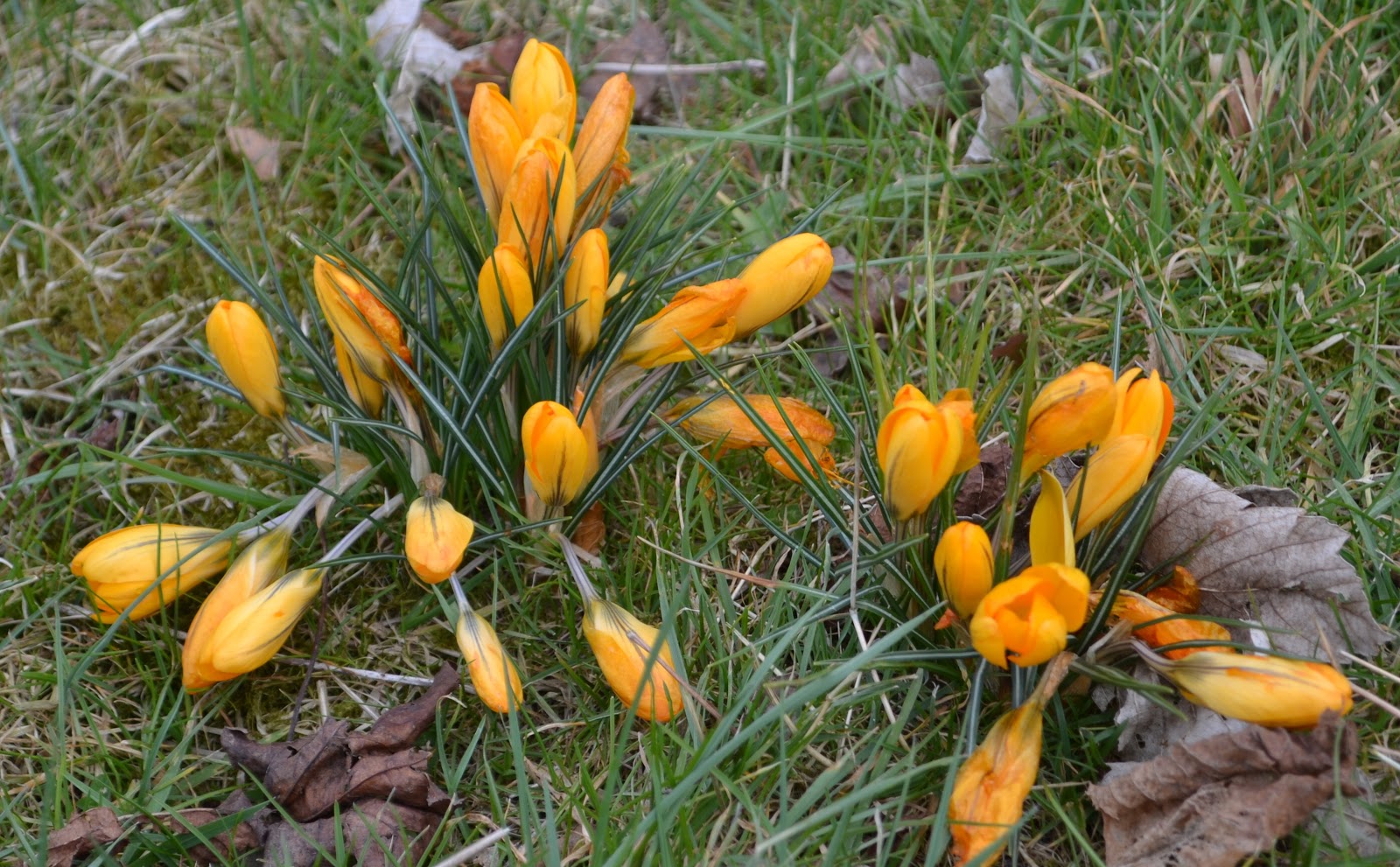
The marsh is now dry and occupied by allotments, parkland and a playground.  The grassy sides of the embankment are planted to a mixture of common bulb-plants.  Those currently in flower (there were many daffodils yet to come) included more snowdrops as above, as well as the simple flowered version, also Winter Aconite, the pale purple Early Crocus Crocus tommasinianus, Compact Grape-Hyacinth Muscari botryoides, Daffodils Narcissus pseudonarcissus ssp pseudonarcissus, 'Bob Minor' (similar to last but deeper yellow petals), 'February Gold' and the neat dwarf cultivar 'Tête-à-Tête', yellow Dutch Crocus Crocus x luteus and more spring crocus, but a deeper shade than at Inkpen. 
 
Planted spring crocus by the Causeway are darker than those at Inkpen

 
Compact grape-hyacinth (which has hooded leaf-tips)

 
Daffodils 'Bob Minor' and 'Tete a tete'

 
Daffodil 'February Gold'

 
Dutch crocus
 
The stream bordering the causeway, which presumably drains the lower land (although the water-table is no doubt lower now anyway), supports Lesser Celandine Ficaria verna and primrose. 
 
Stream near The Causeway with snowdrops

 Tree-stumps alongside the path had conspicuous white Lumpy Brackets Trametes gibbosa.  (While 'Steventon' is usually interpreted as "estate of a man Stīf", it has also been suggested that the first part may derive from styfing OE "tree-stump"!)

Lumpy bracket

 The main Paddington-West railway line passes right through the village and the causeway just before the church and the level-crossing here is a major obstruction, as trains pass every few minutes at great speed.  On the other side the causeway ends just before an open space bordered by streams (with Stinking Hellebore Helleborus foetidus), with the manor house, its old barn supported on brick arches, and the church of St. Michael and All Angels. 

Arch-supported barn near Manor House, Steventon

The church dates back to before 1086, and there must have been an earlier church on the site, as there is a venerable 1200-year-old Yew Taxus baccata at its SW corner, massive in girth, although not all that extensive in height and reach, which may have survived from an even earlier Celtic religious foundation.

 
Old yew Steventon Church

 Another large tree, although of a faster-growing species, is the London Plane Platanus x hispanica by the entrance gate to the churchyard. 
 
Bole of old plane-tree by wall of Steventon Church

The grass is well-mown and contains few species of interest.  There is a patch of snowdrops and a small fenced area just to the right of the entrance with winter aconite, Dutch and early crocus, snowdrops, and daffodils 'Tête-à-Tête', just past which, by the path, is a clump of Stinking Iris or Gladdon Iris foetidissima, so common by old churches for some reason.

Steventon churchyard: early crocus, Tete a Tete daffodil, snowdrop, winter aconite